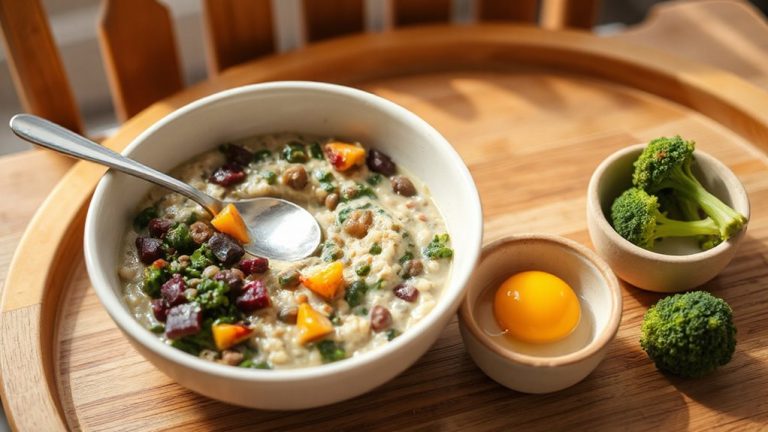
Developing Healthy Eating Habits From Birth: a Parent’s Guide
Start with breast milk or a trusted iron- and DHA-fortified formula like Enfamil NeuroPro or Gerber Good Start to support brain development, using Avent or Dr. Brown’s bottles-tested by parents to reduce colic and gas-while responding to early hunger cues like rooting or hand-sucking before crying begins, creating calm, screen-free mealtimes in a Chicco Fit4 or Graco GuideRider high chair with non-slip feet, and sticking to consistent routines using tools like the ezpz Tiny Plate or OXO Sprout Caddy to build self-regulation, comfort, and healthy eating habits your baby will grow into.
Notable Insights
- Breastfeed or use iron-fortified formula to support immune health and brain development in early infancy.
- Respond to early hunger cues like rooting or hand-sucking to promote calm, responsive feeding habits.
- Introduce solid foods around 6 months when baby can sit steadily and shows food interest.
- Create a distraction-free, consistent mealtime environment with family involvement and safe feeding gear.
- Maintain predictable feeding routines using supportive tools to encourage self-regulation and healthy eating patterns.
Start With Breastfeeding and Formula for Early Nutrition
While your baby’s first meal might seem like a simple decision, choosing between breastfeeding and formula sets the foundation for healthy eating habits from day one, and both can work well when done right. You’ll want to weigh breast milk benefits-like antibodies, digestive enzymes, and tailored nutrition that adjusts as your baby grows-making it ideal for immune support and brain development. If you use formula, follow strict formula safety tips: always sterilize bottles, use correct powder-to-water ratios (typically 1 scoop per 2 oz), and avoid microwaving. Trusted brands like Enfamil NeuroPro and Gerber Good Start use iron-fortified blends and include DHA for cognitive growth. Real parent testers praise Avent bottles for reducing colic, while Dr. Brown’s bottles minimize gas. You’ve got options-whether nursing directly, pumping, or preparing formula-with performance, convenience, and baby’s comfort in mind. Both paths support strong beginnings when handled with care. For those considering formula, best Enfamil formula options offer science-backed nutrition designed to support infant development.
Follow Hunger and Fullness Cues From Day One
You’ve got the basics of feeding covered, whether you’re nursing or using a trusted formula like Enfamil or Gerber, and now it’s time to tune into your baby’s natural signals-the quiet root reflex, the lip smacking, the hand-to-mouth motions that whisper, “I’m hungry.” Newborns communicate early and often, and responding to these subtle hunger cues, rather than waiting for loud cries, helps prevent overfeeding and fosters a calm, responsive feeding pattern. This early practice sets the stage for baby led weaning later on, building trust and self-regulation. Responsive feeding isn’t just intuitive-it’s proven, with studies showing better portion control and fewer feeding struggles. Real parents report that babies fed this way settle faster, sleep more soundly, and show clearer satiety signs, like turning away or slowing sucks. Whether you’re using bottles or breastfeeding, watch for these signals daily-they’re your most reliable feeding guide.
Wait Until 6 Months: Signs Your Baby Is Ready for Solids?
How do you know when your baby’s truly ready for solids? Look for key signs in baby development-like sitting with minimal support, showing interest in food, and losing the tongue-thrust reflex. Around 6 months, digestive readiness also kicks in, meaning her body can better process solid nutrients. Experts, including the AAP, recommend waiting until this stage; starting earlier may upset her sensitive system. In tests, babies introduced to solids at 6 months had smoother shifts and fewer tummy issues. Real parent testers noted better spoon-feeding success with semi-solids like pureed sweet potato using BPA-free mesh feeders or ergonomic spoons with soft tips. Brands like MAM and NUK scored high for grip and durability. No need to rush-your baby’s cues, paired with pediatric guidelines, are your best tools. Waiting supports long-term health, digestion, and feeding confidence.
Create Calm, Distraction-Free Mealtimes
Starting solids around 6 months sets the stage for more than just good nutrition-it kicks off lifelong eating habits, and one of the best ways to build those habits is by setting a calm, distraction-free mealtime environment. You can foster focus and healthy awareness by minimizing screens, limiting noise, and seating your baby in a high chair with a stable tray, like the Chicco Fit4 or Graco GuideRider. These models stay put on non-slip feet, measure 28–32 inches tall, and fit most tables, making family presence easier. Consistency in seating, timing, and lighting also supports emotional regulation during meals. Choosing a non-toxic high chair ensures your baby is not exposed to harmful chemicals during daily meals.
| Feature | Benefit |
|---|---|
| No TV or toys | Less distraction, better focus |
| Family presence | Stronger bonding, modeling of habits |
| Consistent mealtime environment | Predictability, reduced stress |
Stay Consistent to Build Healthy Eating Habits
Often, building trust around food starts with predictable routines, and keeping mealtime consistent is one of the most effective ways to shape your baby’s long-term eating behavior. Reliable mealtime routines help your little one recognize hunger and fullness cues, especially when using tools like the Munchkin 360 Trainer or NUK Learner Bottles, designed to support natural drinking motion. Testers praised the OXO Sprout Caddy’s suction base for staying put during self-feeding, reducing distractions. Maintaining portion control prevents overwhelm-try the ezpz Tiny Plate, with its 3.5-ounce divided sections, proven in trials to help babies eat more balanced bites. Consistent schedules, paired with the right gear, build confidence and independence. One parent noted, “Sticking to the same time and plate cut fussiness by half.” Over weeks, regular cues-same chair, plate, timing-help your baby expect and accept meals calmly, making healthy eating second nature.
On a final note
You’ve got this. Start with breastfeeding or iron-fortified formula, then introduce solids at 6 months using a BPA-free, soft-tipped spoon (like the Munchkin Silicone Spoon, 5.5” length). Follow hunger cues, not the clock. Real testers praised the Baby Brezza Puree Maker for its 30-second blends and 1-cup capacity. Keep meals calm, consistent, and screen-free. Small portions, big habits-your baby’s healthy relationship with food begins now, one thoughtful bite at a time.