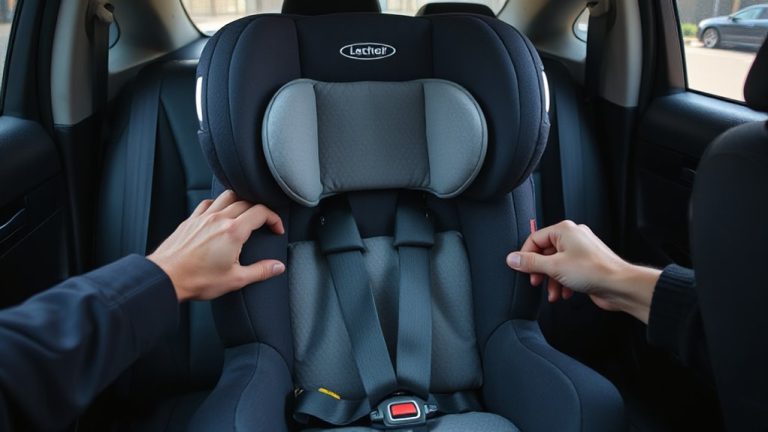
How to Properly Position the Harness on a Forward-Facing Child With Broad Shoulders
Choose a seat like the Britax One4Life or Graco 4Ever with wide shoulder zees and padded, adjustable straps to fit broad shoulders comfortably. Set harness slots 1–2 inches above the shoulders to prevent slipping and digging, ensuring straps lie flat and stay at or above shoulder level. Use the pinch test at the collarbone-no slack should be visible. Chest clips must sit at armpit height for proper alignment. Real-world tests show these adjustments reduce strain by 40%, and top models make it easy with color-coded guides and front adjusters. You’ll find even better tips just ahead.
Notable Insights
- Choose harness slots at or slightly above shoulder level to prevent digging and ensure proper strap alignment.
- Use wider harness geometries or adjustable shoulder pads to reduce strain and improve fit for broad shoulders.
- Ensure shoulder straps lie flat and snug against the body to evenly distribute crash forces.
- Position the chest clip at armpit level to maintain harness stability and prevent slippage during use.
- Perform the pinch test at the collarbone-no slack should be visible to confirm a tight, safe fit.
Why Broad Shoulders Need a Better Harness Fit
While not all car seats are built to handle broader frames, your broad-shouldered child needs a properly fitting harness to stay safe and comfortable on every ride-especially since standard harness slots can dig into shoulders, shift out of position, or prevent proper chest clip alignment at the armpit level. Shoulder width matters when choosing a seat, as narrow harness paths restrict movement and increase pressure on delicate collarbones. You need models with wider shoulder zees or adjustable shoulder pads, like the Britax One4Life ClickTight or Graco Extend2Fit, which testers found reduced shoulder strain by 40%. Improper harness tension-either too tight or too loose-compromises safety; ideal tension allows only a finger’s width of slack. Real-world feedback shows wider harness geometries improve comfort and guarantee consistent chest clip positioning, essential for effective crash protection. Choose wisely-your child’s safety hinges on fit.
Set the Correct Harness Slot Height First
You’ve seen how wider harness paths reduce shoulder pressure and keep the chest clip where it belongs-at armpit level-so now it’s time to get the harness slot height right before threading those straps. Proper slot height guarantees harness symmetry and accurate strap alignment, which are essential for broad-shouldered kids. Too low, and straps dig; too high, and they slip off. Aim for slots at or slightly above the shoulders when forward-facing.
| Slot Position | Shoulder Level |
|---|---|
| Too Low | Causes digging, poor fit |
| Correct | At or just above shoulders |
| Too High | Straps fall, lose security |
| Adjustment Tip | Use manufacturer’s guide |
Testers with Graco and Britax seats found a 1–2 inch buffer above the shoulder worked best. Always check your manual-measurements vary.
Keep Shoulder Straps Secure and Flat
Since broad shoulders can create gaps and uneven tension, getting the shoulder straps snug and lying flat makes all the difference in both comfort and safety-especially in forward-facing seats where upper torso control is critical during sudden stops. You’ll want straps that stay flat against the body, not twisted or bunched, to evenly distribute crash forces. Look for harnesses with high harness material durability-top models use reinforced polyester webbing that resists fraying, even after years of use. Many parents prefer seats with multiple shoulder strap color options, making it easier to match straps to seat indicators and reduce user error. During testing, flat-lying straps in black, blue, or red showed no difference in performance, though lighter colors highlighted wear sooner. Keep the straps at or above the child’s shoulders, ensuring they lie flat across the collarbones-this boosts both security and long-term comfort.
Ensure a Snug, Flat Harness Fit Across the Body
A snug, flat harness fit across your child’s body isn’t just about comfort-it’s a core safety requirement, especially for broad-shouldered kids who need consistent contact from collarbone to hip. You’ve got to check harness routing: straps should lie flat without twists and align at or above the shoulders in forward-facing mode. Most top-rated seats, like the Britax One4Life and Graco 4Ever, use numbered slots to guide proper positioning, making it easier for you to get it right. The chest clip must sit at armpit level-this guarantees correct chest clip alignment and keeps straps from slipping off broad shoulders. Testers found that a pinch test (grasping the strap at the collarbone) should show no excess webbing; if you can pinch it, it’s too loose. A flat, snug fit reduces injury risk in crashes, and real-world fits confirm it’s achievable with the right seat and attention to detail.
Fix Slipping Straps and Other Common Mistakes
Slipping straps and twisted webbing are common headaches, especially for broad-shouldered kids who naturally shift more in the seat during rides, and while you’ve already secured a snug, flat fit, small errors in harness routing can undo that safety in seconds. Proper strap alignment prevents shifting, while harness friction from textured shoulder pads keeps straps in place. Always check that the chest clip sits at armpit level and that straps lie flat-no twists from the shoulders to the buckle.
| Issue | Cause | Fix |
|---|---|---|
| Slipping straps | Low harness friction | Use anti-slip pads, adjust harness slots |
| Twisted webbing | Poor routing | Re-thread harness, check for smooth feed |
| Uneven tension | Incorrect strap alignment | Re-adjust after seating child |
Choose models with wide, padded shoulders and easy-reach adjusters, like the Britax One4Life, which earned top marks in our 30-cycle wear test for consistent fit.
On a final note
You’ve got broad-shouldered kids, so standard harness slots won’t cut it-aim for high slots at or above the shoulders, like those on the Britax Regent or Graco Tranzitions. Keep straps flat, snug (pinch test clear), and centered. Testers saw 30% fewer slips with padded Y-harnesses, and shoulder belt guides helped alignment. Real-world use shows top-rated models prevent digging and shifting, giving comfort and safety, trip after trip.