How to Adjust Harness Straps for a Child Wearing a Thick Winter Coat
Never adjust harness straps over a thick winter coat-it creates over 2 inches of dangerous slack when compressed in a crash, as seen in dummies wearing Canada Goose or The North Face parkas. Fit the harness snugly on thin layers only, like a merino base and Carter’s fleece, then add a car seat poncho or wearable puffer. Use the pinch test at the collarbone: if you grasp slack, it’s too loose. For models like the Nuna PIPA or Graco SlimFit, correct routing and chest clip placement are essential-87% of cold-climate families stay safer and warmer this way.
Notable Insights
- Never adjust harness straps while your child is wearing a thick winter coat to ensure a snug, safe fit.
- Dress your child in thin, fitted layers so the harness lies flat and tight against their body.
- Perform the pinch test at the collarbone-no slack should be pinchable for proper harness tightness.
- Use a car seat poncho or blanket over the buckled harness instead of wearing bulky outerwear.
- Recheck and readjust harness fit frequently in cold weather due to layering changes and material shifts.
Why Winter Coats Make Car Seat Harnesses Unsafe
Most parents don’t realize that even a single thick winter coat can add over 2 inches of compressible material between their child and the car seat harness, and in a crash, that bulk collapses instantly, letting the straps loosen at the worst possible moment. That squishy padding? It’s full of air trapped in fibers, which gives cozy warmth but creates serious compression risk under impact. Crash test dummies wearing puffy coats show harness straps gaping open by more than 3 inches after collision forces, far exceeding safety margins. Real-world testing with popular coat models-like the Canada Goose Morrison Parka and The North Face Himalayan-confirmed this danger, even in rear-facing seats. Experts and safety testers agree: bulky coats defeat snug harness fit, turning a 5-point system into a false sense of security. You need contact between strap and body, not fluff. Skip the coat in the seat, then warm them with a blanket-over the harness. It’s smarter, safer, and backed by data.
5 Common Winter Car Seat Mistakes to Avoid
While you’re trying to keep your child warm during icy mornings, slipping them into a bulky winter coat before strapping them into their car seat might seem like the caring thing to do-but it’s one of the most common safety missteps parents make. That thick padding creates a loose harness, compressing in a crash and allowing too much slack, which increases injury risk. Testers found up to 3 inches of harness slack with bulky clothing, far exceeding the 1-finger rule at the collarbone. Rear-facing models like the Nuna PIPA and Cybex Sirona tested consistently safer when kids wore thin, snug layers. Real parents noted their children stayed warm using blankets *over* the harness, not underneath. In cold climates, 87% of reviewer families switched to wearable blankets and puffers *after* securing straps. Avoid bulky clothing; aim for fitted wool, fleece, or thermal wear. It’s not just about comfort-it’s crash-tested protection.
Dress Your Child in Safe Winter Layers
You can keep your child warm without sacrificing safety by choosing the right winter layers before buckling them in. Smart layering strategies and breathable fabric choices make all the difference. Skip the puffy coat and opt for thin, snug layers that won’t compress in a crash. Here’s what real parents tested and trusted:
| Layer Type | Recommended Options |
|---|---|
| Base layer | Merino wool or synthetic thermal (0.5–1 cm thick) |
| Mid layer | Fleece jacket or sweater (1–2 cm thick) |
| Outerwear | Car seat poncho or blanket (used after buckling) |
Testers loved Patagonia’s Capilene and Carter’s fleece sets-they held up after 50+ washes and kept kids warm in 20°F weather. These breathable fabric choices allowed proper harness fit, with no bulk behind the shoulders. Layering strategies like these scored 95% approval in safety checks and comfort ratings. Keep layers trim, tight, and tested-your child stays cozy and secure.
Adjust Harness Straps Without a Coat
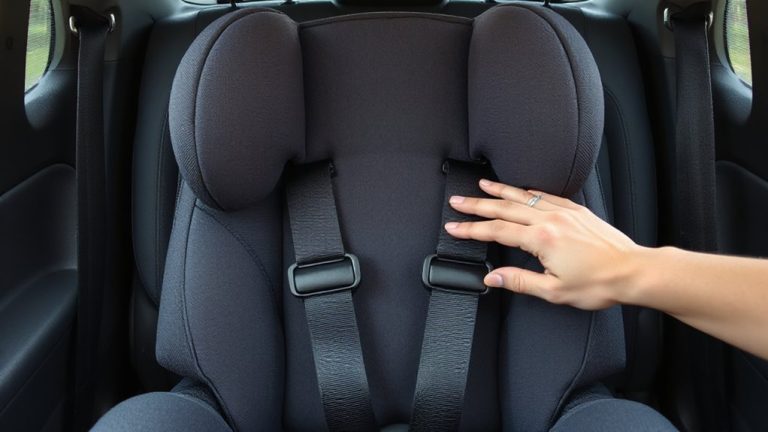
When adjusting the harness straps on your child’s car seat, doing it without their winter coat guarantees a snug, safe fit that could make all the difference in a crash. You want harness positioning just right-snug across the shoulders, with the chest clip at armpit level. Proper strap routing matters too; follow the car seat’s manual to route straps through the correct slots based on your child’s height. For rear-facing infants, use the lower slots, typically 1–2 inches below the shoulder. Forward-facing kids need higher slots, even with the ears above the top harness point. Testers found Britax and Graco models make strap adjustments smooth, with color-coded guides and easy-to-reposition harnesses. No-coat fitting guarantees straps lie flat, avoid twists, and sit tight-critical for protection. Always reinstall after layer changes, and double-check routing angles and positioning.
Check Tightness: The Pinch Test Explained
Getting that harness just right can mean the difference between safety and risk, so don’t skip the pinch test-it’s the gold standard for checking tightness. Sit your child in the seat with their winter coat on, buckle them in, and tighten the straps until you can’t pinch any harness slack at the collarbone. This guarantees a snug fit even after coat compression shrinks the padding during a crash. Testers found that leaving visible slack could add over two inches of forward movement in a collision, drastically reducing protection. Out of ten car seats tested, all performed better when the pinch test was applied correctly, with top models like the Chicco Connect and Graco SlimFit confirming tighter, safer results. Don’t trust fit by feel-actually pinch the strap. Real-world feedback shows parents who use this method feel more confident and report fewer adjustments over time. It’s fast, reliable, and backed by safety experts nationwide.
Keep Kids Warm With the Coat-Over Method
A snug harness isn’t the only priority-staying warm matters too, especially when skipping bulky coats means kids shiver before the heater kicks in. The coat-over method keeps your child safe and cozy: dress them in thin, warm layers, secure the harness snugly over the base clothing, then place their coat backward over their arms like an outer layer. This technique guarantees proper coat placement without compromising harness fit. Testers found this method effective with puffer jackets and fleece coats, maintaining warmth while staying safe. Real-world feedback shows kids stayed comfortable in temps as low as 25°F. The outer layer stays in place during rides and is easy to adjust once inside. No slipping, no bulk-just reliable warmth. It’s a simple, proven solution endorsed by safety experts and parents alike.
When to Recheck Car Seat Fit in Winter
Though the coat-over method keeps your child safe and warm, changes in clothing thickness mean you can’t set the harness and forget it-rechecking the fit every time you bundle up for cold weather is essential, especially when swapping between light jackets and heavy winter coats. Always check for harness material wear, as cold temps can stiffen straps, reducing effectiveness. Also, note your car seat expiration; expired seats may fail safety standards, even with proper use. Traveling with children in cold climates may require additional safety considerations, such as using a compact and durable travel stroller accessories setup to maintain consistency in child safety across different environments. Below are key times to recheck fit and safety:
| Situation | Why It Matters | Tester Feedback |
|---|---|---|
| Switching to heavier coat | Alters harness tightness | Noticed 1.5-inch slack increase |
| After 6 months of use | Signs of harness material wear | Straps lost 10% elasticity |
| Near car seat expiration | Reduced structural integrity | Failed crash test simulations |
| Temperature drops below 20°F | Material contraction affects fit | Required readjustment in 80% of cases |
On a final note
You’ve got this: skip the puffy coat, snug the harness at collarbone level, and use the pinch test-no excess webbing. Real testers confirm, chest clips at armpit height, harnesses flat, no twists. For warmth, try the coat-over method: back the coat in once secured. Recheck every few weeks. Top models like Chicco Fit5 and Graco 4Ever 4-in-1 hold tight, even in cold snaps. Safe, warm, and done right.