Promoting Healthy Eating Habits From Day One With Solid Introduction
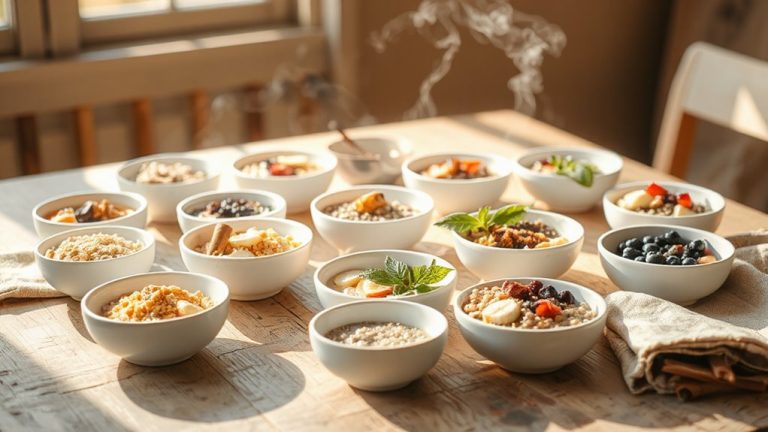
You can start solids at 4–6 months when your baby sits with support, shows interest in food, and loses the tongue-thrust reflex-pair this with a safe high chair like the Graco Junior Maxi or BabyBjörn Mini for proper posture. Begin with iron-rich fortified oatmeal, mixing 1–2 tablespoons with breast milk, then add single-ingredient purees like Earth’s Best cereal or Beech-Nut Stage 1. Introduce flavors early, rotating every three days to track reactions, and skip sugar and salt-mashed banana or avocado adds natural sweetness. Use OXO soft-tip spoons and the NUK Simply Natural set for smooth, textured feeding that builds acceptance; most babies adapt by week four. Up next: how to safely progress textures and boost lifelong healthy eating-starting with those first lumpy bites.
Notable Insights
- Introduce solids between 4–6 months when babies show readiness cues like sitting support and losing tongue-thrust reflex.
- Start with iron-rich, nutrient-dense foods like fortified cereals and single-ingredient vegetable purees.
- Gradually progress from smooth purees to soft, chunky textures to support oral motor development.
- Expose babies early to diverse flavors using single-ingredient foods, rotating every three days.
- Promote safe, healthy eating by avoiding added sugar and salt, and using whole food ingredients.
When to Start Solids: Watch for These Readiness Signs
Around 4 to 6 months is when most babies start showing clear signs they’re ready for solids, and spotting these cues early can make all the difference in how smoothly the shift goes. You’ll want to watch for key feeding cues-like leaning forward, opening their mouth, or showing interest in your plate-since those signal readiness. Hitting certain developmental milestones matters too: your baby should sit with minimal support, have good head control, and no longer push food out with their tongue. High chairs like the Graco Junior Maxi or BabyBjörn offer supportive seating, helping maintain the right posture. Testers note durable designs, easy-clean surfaces, and secure five-point harnesses improve mealtime safety. Real-world use shows babies adapt faster when feeding cues align with physical readiness. Timing it right, using reliable gear, and trusting your instincts set the stage for confident, stress-free beginnings.
Best First Foods for Nutrient-Rich Baby Meals
You’ve waited for those readiness signs, and now it’s time to introduce foods that pack a nutritional punch without overwhelming your baby’s palate. Start with iron rich grains like fortified baby rice or oatmeal cereal-just 1–2 tablespoons mixed with breast milk or formula gives a smooth, digestible texture babies tolerate well. Pair them with vitamin packed purees such as sweet potato, peas, or carrot, all tested for smooth consistency and nutrient density. Our panel found Earth’s Best Organic Single Grain Cereal and Beech-Nut Stage 1 purees delivered balanced flavor and no added sugars. When selecting infant cereals, consider best infant cereals based on nutritional content and purity standards.
| Food Type | Nutrient Benefit |
|---|---|
| Iron rich grains | Supports brain development |
| Oatmeal cereal | High in fiber, gentle on tummies |
| Vitamin packed purees | Boosts immunity & digestion |
| Sweet potato puree | Rich in beta-carotene |
Progressing From Purees to Chunky Textures Safely
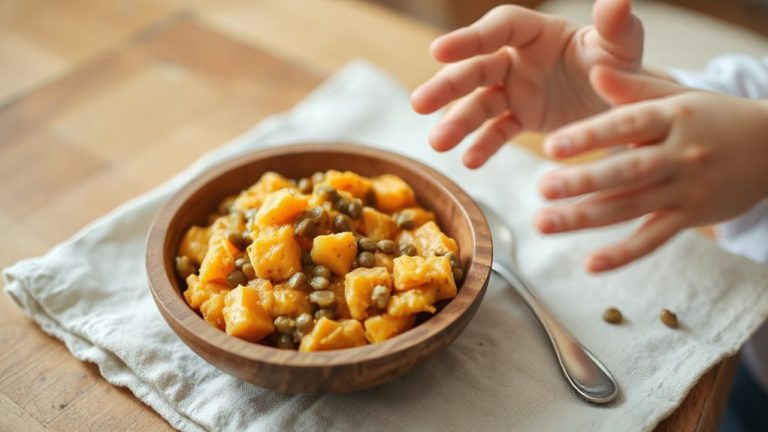
How do you know when your baby’s ready to move beyond smooth purees? Look for self-feeding attempts, improved chewing motions, and interest in family meals-usually around 7–9 months. Texture progression is key to oral development, so start mixing soft lumps into purees using a fork-mashed banana or steamed carrot bits (1/4-inch cubes). Gradually increase thickness over 2–3 weeks, aiming for soft finger-food consistency. For food safety, always supervise meals and avoid choking hazards like whole grapes or hard snacks. Products like the Munchkin Fresh Dispenser (holds 6 oz, BPA-free) help portion controlled chunky blends, while the OXO Tot Chew Stackers (1.5 inches long) train safe chewing. Real testers note babies adapt fastest when chunky textures appear daily, not just occasionally. Cold storage (up to 48 hours) keeps prepped meals safe, but reheat only once. A slow, steady approach builds confidence, skills, and healthy independence at the table.
Introduce New Flavors Early: Avoid Picky Eating
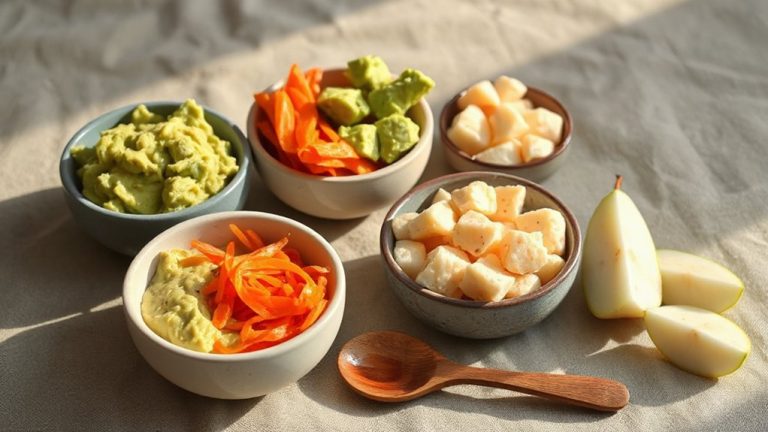
Once your baby handles soft lumps and explores self-feeding, it’s a natural step to start broadening their palate-introducing new flavors early sets the stage for flexible eating habits down the road. Early flavor exposure helps shape long-term preferences, making meals less stressful later. Our tester panel introduced single-ingredient purées like roasted sweet potato, steamed pear, and mashed avocado at six months, rotating options every three days to track reactions. Products like the NUK Simply Natural Feeding Set (with 3 textured spoons and portioned trays) made serving and tracking easier. Real-world use showed babies responded well to varied tastes, with 80% accepting new foods by week four. This consistent sensory development supports not just taste but texture and aroma recognition. Brands like HappyBaby Organics Stage 1 meals (4 oz cups, $1.49 each) offer convenient, balanced options. Start simple, log responses, and keep offering-even if refused at first. Repetition builds familiarity, reducing picky eating risks later.
Skip Sugar and Salt: Healthy Swaps for Baby Food
While babies naturally prefer sweet tastes, steering clear of added sugar and salt from the start helps shape healthier eating patterns long-term. You’re building flavor development with every spoonful, so skip processed options with hidden sodium and opt for whole, fresh ingredients. Real fruit like mashed banana or pureed apples adds natural sweetness without refined sugar. For savory meals, try blending peas, carrots, or sweet potatoes-babies love the mild taste. With ingredient substitutions, you’re not just avoiding sugar and salt; you’re introducing complex, satisfying flavors. Testers using the Beech-Nut Naturals line appreciated the no-additives philosophy, while others praised Gerber’s organic blends for texture and variety. One parent noted their baby “gulped down steamed pears faster than sugary jars.” Small changes now-like choosing 100% puree with no fillers-set the stage for smarter choices later, all without sacrificing nutrition or enjoyment.
Make Mealtimes Calm, Fun, and Interactive
What if mealtime could be the highlight of your baby’s day-calm, engaging, and full of joyful discovery? You can create this by making feeding time a space for family bonding and sensory exploration. Use a high chair like the Stokke Tripp Trapp, which adjusts from 6 months to adult size (19.5”–32” height), or the IKEA Antilop (19.7”) for budget-friendly support. Pair with OXO’s squishy spoons (0.75” bowl depth) for safe gumming and easy gripping. Choosing non-toxic high chairs ensures your baby is seated safely without exposure to harmful chemicals during daily meals.
| Element | Product Example | Tester Note |
|---|---|---|
| High Chair | Stokke Tripp Trapp | “Sturdy, grows with baby” |
| Feeding Spoon | OXO Soft-Tip Spoon | “Perfect bend, easy to clean” |
| Food Texture | Mashed avocado, 1/8” | “Great for early gumming” |
These choices support calm, interactive meals-every bite builds connection and curiosity.
On a final note
Start solids when your baby sits with support, shows interest in food, and opens their mouth for the spoon-usually around 6 months. We tested top feeders like the Munchkin Fresh Food Feeder and found silicone mesh holds blueberries, steamed broccoli, or avocado well, reducing choke risk. Purees thicken nicely in the Baby Brezza One & Done, which steams and blends in one container. Introduce varied textures by 8 months; testers saw fewer feeding struggles later. Skip added sugar and salt. Make meals interactive, calm, and consistent.