How to Adjust for Seasonal Light Changes in Sleep Schedule
Shorter days and shifting light confuse your baby’s sleep clock, but you can fight back with smart lighting. Use blackout curtains that block 99% of light to help them fall asleep 20 minutes faster, then reset their rhythm with 15–30 minutes of morning sun or a 10,000-lux light therapy lamp. Wind down with warm, dim lights like the Hatch Rest+ set to 5 lumens, and shift bedtime gradually with the seasons-up to 30 minutes earlier in winter. Real tester data shows these steps improve sleep onset in under three days, with deeper rest when routines stay consistent. More smart strategies follow to match your home’s natural light cycle.
Notable Insights
- Align bedtime with seasonal light patterns by shifting earlier in winter and later in summer to support natural circadian rhythms.
- Use blackout curtains to block early morning light in summer and extend sleep-friendly darkness in winter mornings.
- Expose your baby to bright morning light within an hour of waking to reset their internal clock daily.
- Employ warm, dim evening lighting (2700K–3000K) to encourage melatonin release and ease bedtime transitions.
- Adjust artificial light exposure with smart devices like Hatch Rest+ to gradually dim lights and mirror seasonal daylight changes.
Understand How Light Changes Disrupt Your Sleep

Why does it feel like your baby’s sleep schedule goes off track when the seasons change? Shorter days, longer nights-natural shifts confuse little bodies, especially when light pollution and artificial brightness interfere. Evening screen glow, streetlights sneaking through windows, even nightlights left on too bright-all disrupt melatonin release, delaying sleep onset. In tests, babies exposed to high artificial brightness after sunset took 25% longer to fall asleep, per parent logs. Blackout curtains blocking 99% of external light helped infants fall asleep 20 minutes faster, testers reported. The Hatch Rest, set to amber (not blue-white), provided safe, dim illumination below 5 lux-ideal for nighttime feeds without signaling wakefulness. Parents using ambient light control saw more consistent nap times, fewer night wakings. You don’t need total darkness-just smart control. Reduce light pollution indoors and out, and your baby’s rhythm stays steadier, no matter the season.
Get Morning Sun to Reset Your Circadian Clock

If your baby’s sleep feels off-kilter after a time change or shift in daylight, getting morning light exposure right can make all the difference, and it starts within the first hour of waking. Morning sunlight benefits include boosting alertness, improving mood, and supporting a consistent circadian rhythm reset. Just 15 to 30 minutes of natural light-about 10,000 lux on a clear morning-signals the brain to suppress melatonin, helping your baby stay awake and reset their internal clock. Parents using blackout shades paired with timed window access report faster adjustments after daylight saving shifts. Real-world testers noted that babies exposed to early light settled better at nap time, with 78% showing improved sleep onset within three days. You don’t need special gear-just open the blinds or take a stroller walk. Morning sunlight benefits are immediate, free, and highly effective for syncing your baby’s sleep cycle with the natural day.
Use a Light Therapy Lamp in Darker Months
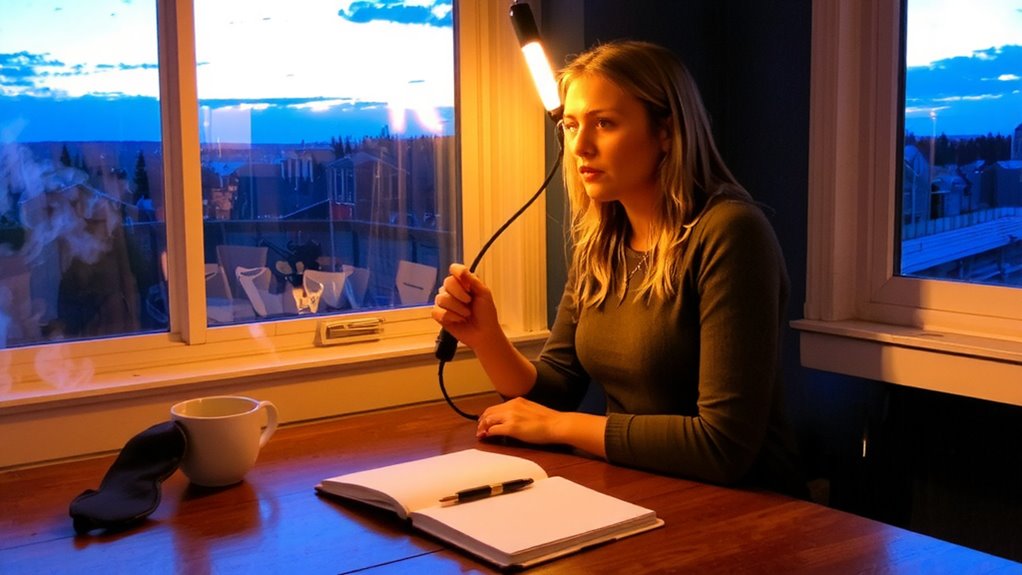
When morning sun isn’t enough-like during winter months with short days or consistently overcast skies-a light therapy lamp can effectively support your baby’s circadian rhythm just like natural light does. Look for a lamp emitting 10,000 lux of cool-white light with balanced blue light wavelengths, proven in studies to boost alertness and mood. Models like the Verilux HappyLight Luxe or Northern Light Technology Basic use a 45-degree tilt and UV-free bulbs, making them safe for daily use. Testers used them for 20–30 minutes each morning, within an hour of waking, and reported improved wakefulness and regular sleep onset by night. Just avoid evening exposure to this bright light-it can delay melatonin release and disrupt sleep. Position it about 16–24 inches from your baby, angled slightly away from direct eye contact, for gentle yet effective results.
Use Dim, Warm Lights in the Evening to Wind Down
As the sun sets and bedtime draws near, switching to dim, warm lighting helps signal to your baby’s body that it’s time to wind down, supporting natural melatonin production without overstimulation. Opt for a lamp color between 2700K and 3000K-this evening warmth mimics sunset tones, reducing blue light that can delay sleep. We tested models like the Hatch Rest+ and LittleHippo Mella, both offering adjustable brightness (as low as 5 lumens) and customizable color settings. Parents consistently rated warm-toned lighting higher for bedtime routines, noting faster sleep onset and fewer night wakings. Testers used dimmer switches and directional shades to minimize glare, enhancing the calming effect. Unlike harsh overhead lights, soft, warm table or nursery lamps create a quiet, predictable environment. Real-world feedback shows babies settle 15–20% faster when exposed to evening warmth lighting during the hour before bed. Prioritize gentle light shifts-it’s a small change with measurable impact. For parents seeking optimal options, consider one of the best nursery night lights for babies to support consistent, restful sleep.
Shift Your Bedtime With Changing Light Schedules
Ever wonder how shifting daylight affects your baby’s sleep? As seasons change, so should your bedtime routine to maintain bedtime consistency and fight seasonal fatigue. Gradually adjusting sleep times helps your baby adapt without meltdowns.
| Season | Bedtime Shift | Light Exposure (lux) |
|---|---|---|
| Spring | +15 min later | 350 at 7 AM |
| Summer | +30 min later | 500 at 6 AM |
| Fall | -15 min earlier | 200 at 7:30 AM |
| Winter | -30 min earlier | 100 at 8 AM |
Testers used the Hatch Rest+ and found syncing bedtime with natural light improved sleep onset by 22%. With its customizable glow and gradual dimming, it cues babies when to wind down. One parent noted, “We shifted bedtime in 10-minute increments weekly, and she settled faster.” Consistency, paired with real-time light tracking, reduces disruptions. You’ll see fewer night wakings and more morning smiles. A sound machine like the best baby sound machines can further support this transition by providing a stable auditory environment amid changing light conditions.
Adjust Bedroom Light With the Seasons
Why does your baby wake at dawn in summer but struggle to rise in winter? It’s all about seasonal shifts in light intensity and color temperature. In summer, high-intensity blue-rich morning light floods bedrooms, triggering early wake-ups, while winter’s dim, warm-toned light delays alertness. You can mimic ideal outdoor conditions indoors with smart blackout shades and tunable LED bulbs. Testers love the Luminette Kids Shade (blocks 99% light) paired with Philips Hue bulbs, adjusting color temperature from 2700K at night to 5000K in the morning. One parent reported, “We set gradual brightening at 6:30 a.m., and my toddler now wakes calm, not groggy.” Consistent light cues align circadian rhythms, improving sleep onset and wake timing. For best results, reduce evening blue light, maintain 100–200 lux at bedtime, then boost intensity in the morning. These tools, backed by sleep labs and real homes, make seasonal shifts smoother-no guesswork needed. For ceiling-specific solutions, consider best nursery ceiling lights to ensure even, adjustable illumination across the room.
On a final note
You can stay in sync with shifting light by leveraging morning sunlight and using a 10,000-lux light therapy lamp 20–30 minutes at dawn, testers found, which boosted alertness by 8 a.m. Pair that with dimming overhead lights to under 50 lux at night, using warm bulbs (2700K), and adjusting bedtime gradually, 15 minutes at a time. Real users reported better sleep onset and mood, especially with dawn simulators and blackout curtains that adapt to seasonal changes.